


Environmental Education

The famous British broadcaster and natural historian, David Attenborough, once said “No one will protect what they don’t care about; and no one will care about what they have never experienced.”
The primary goal of the Natural Resources Program is multifold – we strive to not only maintain healthy ecosystems such as streams, wetlands, upland, and forested areas, but also to engage with the public about the importance of these ecosystems – challenging all Wilsonville residents to think and act through the lens of environmental stewardship. The Natural Resources Program utilizes existing city owned resources, partnerships, and land to convey what is worth experiencing and protecting in our local community.
Resources for Educators
The Natural Resources Program has a number of physical and digital resources that can be utilized by local educators. These resources are outlined below.
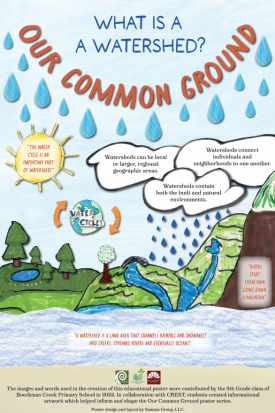
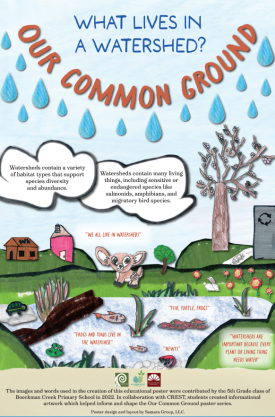
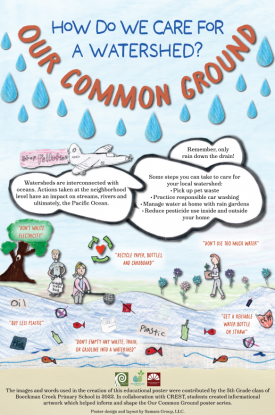
Educational Posters - With the support of Samara Group, a local environmental consulting company, Natural Resources developed educational posters with artwork from the 5th grade class of Boeckman Creek Primary School. The posters are designed to introduce three key topics:
- What is a watershed?
- What lives in a watershed?
- How do we care for a watershed?
 |
 |
 |
Educators can access the poster files in the attachments below or borrow framed versions of the poster for classroom instruction or display for a given period.
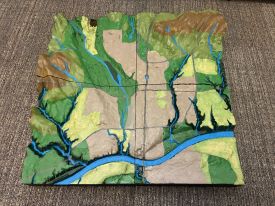
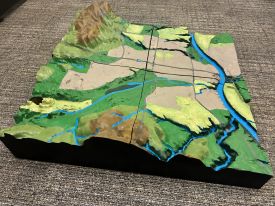
City of Wilsonville 3D Model - The Natural Resources Program, in partnership with Boeckman Creek Primary School and the Center for Research in Environmental Science and Technologies, developed a 3D- printed model of the city’s local watersheds. This physical resource was designed to engage primary school students in place-based science to enrich their learning opportunities.
 |
 |
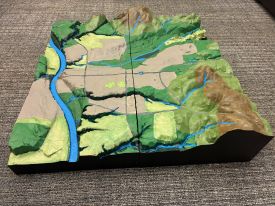 |
Educators can borrow the model for classroom instruction or to display for a given period.
Game Camera photo sets of local wildlife - The Community Wildlife Connection Project was made possible thanks to funding from a Community Enhancement Grant with the goal of developing a strategy for sharing information about the city's wildlife, fostering partnerships with local schools and community members, and engaging community members who are interested in supporting local wildlife. Educators can access wildlife imagery for instruction here:
File of wildlife highlights here: Community Wildlife Connection Monitoring Highlights
In class presentations – Both staff of the city’s Natural Resources staff are available for in class presentations regarding stormwater management, local ecology, habitat restoration, or most environmental topics appropriate for K-12 curriculum.
Resources for the Public
In person or virtual presentations - Both staff of the city’s Natural Resources staff are available for in person or virtual presentations regarding stormwater management, local ecology, habitat restoration, or most environmental topics. Natural Resources staff have presented to local garden clubs, HOAs, and non-governmental organizations and can speak to city code, ordinances, and policy as it relates to the environment.
Environmentalism at Home
Backyard level stewardship can play a significant role in local environmental health; many small actions can have a cumulative environmental impact across a community. It is important to keep in mind that most ecosystems and water bodies are downstream of neighborhoods, and what happens in an individual yard can improve (or degrade) the integrity of other parts of a watershed. Individuals can help in several ways, including reducing or eliminating lawn fertilizers and pesticides, properly dispose of pet waste, and avoiding washing vehicles at home. All properties have an impact so keep your local waterways in mind when making decisions at home!
Please reach out to the city’s Environmental Specialist, Jim Cartan – jcartan@wilsonvilleoregon.gov; (503) 570-1552, with any inquiries about the resources highlighted on this page.
Supporting Documents
 Environmental Stewardship (373 KB) Power Washing BMP (2 MB) Landscape BMP (2 MB) Spills BMP (3 MB) WLIAWS Poster (166 KB) WIAWS Poster (160 KB) HDWCFAWS Poster (162 KB)
